


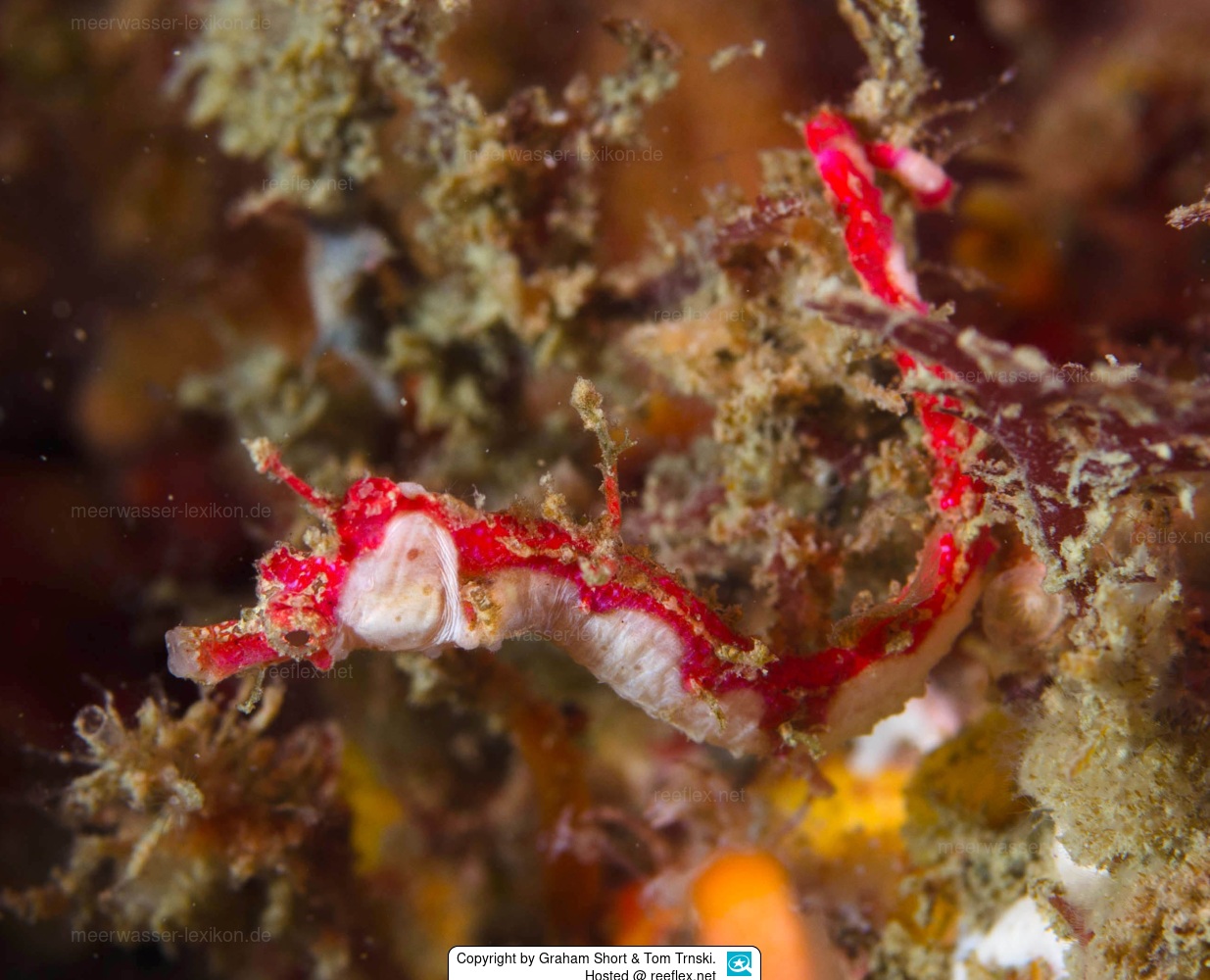
 Drs. Graham Short & Tom Trnski, USA & Neuseeland


Info
In September 2021, a special - in several respects - dwarf needle horse was first described.
We sincerely thank Dr. Graham Short, California Academy of Sciences, one of the scientists who first described the new species, for the three great photos of the new genus and species.
Among the unique features of Cylix tupareomanaia is the fact that this new pygmy needle horse originated in New Zealand, it is the first pygmy needle horse discovered in the country.
Locations of discovery: Poor Knights Island and Waiatapaua Bay, Whangaruru, Northland, New Zealand.
This is a tiny, candy-colored pygmy needle horse discovered in a small area off the north coast of New Zealand, and given a Māori name by the local iwi (tribe) - it is believed to be the first time an indigenous group has officially named a new species!
The 6 cm long animal is closely related to the seahorse and lives in the rocky reefs off the northeast coast.
The Ngātiwai tribe worked with biodiversity researchers Dr. Thomas Trnski of the Tāmaki Paenga Hira Auckland Museum and Graham Short of the California Academy of Scientists to name the pygmy seahorse Cylix tupareomanaia.
Naming:
"Cylix" is a new genus name and derives from the Greek and Latin words for "cup" or "calyx," referring to the cup-like attachment on the new species' head.
The second part of the name "tupareomanaia" refers to "the garland of manaia" - "manaia" is the Māori name for a "seahorse" and also means "ancestor" or "tupuna".
We sincerely thank Dr. Graham Short, California Academy of Sciences, one of the scientists who first described the new species, for the three great photos of the new genus and species.
Among the unique features of Cylix tupareomanaia is the fact that this new pygmy needle horse originated in New Zealand, it is the first pygmy needle horse discovered in the country.
Locations of discovery: Poor Knights Island and Waiatapaua Bay, Whangaruru, Northland, New Zealand.
This is a tiny, candy-colored pygmy needle horse discovered in a small area off the north coast of New Zealand, and given a Māori name by the local iwi (tribe) - it is believed to be the first time an indigenous group has officially named a new species!
The 6 cm long animal is closely related to the seahorse and lives in the rocky reefs off the northeast coast.
The Ngātiwai tribe worked with biodiversity researchers Dr. Thomas Trnski of the Tāmaki Paenga Hira Auckland Museum and Graham Short of the California Academy of Scientists to name the pygmy seahorse Cylix tupareomanaia.
Naming:
"Cylix" is a new genus name and derives from the Greek and Latin words for "cup" or "calyx," referring to the cup-like attachment on the new species' head.
The second part of the name "tupareomanaia" refers to "the garland of manaia" - "manaia" is the Māori name for a "seahorse" and also means "ancestor" or "tupuna".


