


 ZooKeys

Info
Dactylocalyx pumiceus is an inhabitant of lower mesophotic reefs with a distinctly different frequency of occurrence of the FGBNMS, the species was collected on Elvers Bank, where it occurred in small numbers (1 - 10 specimens).
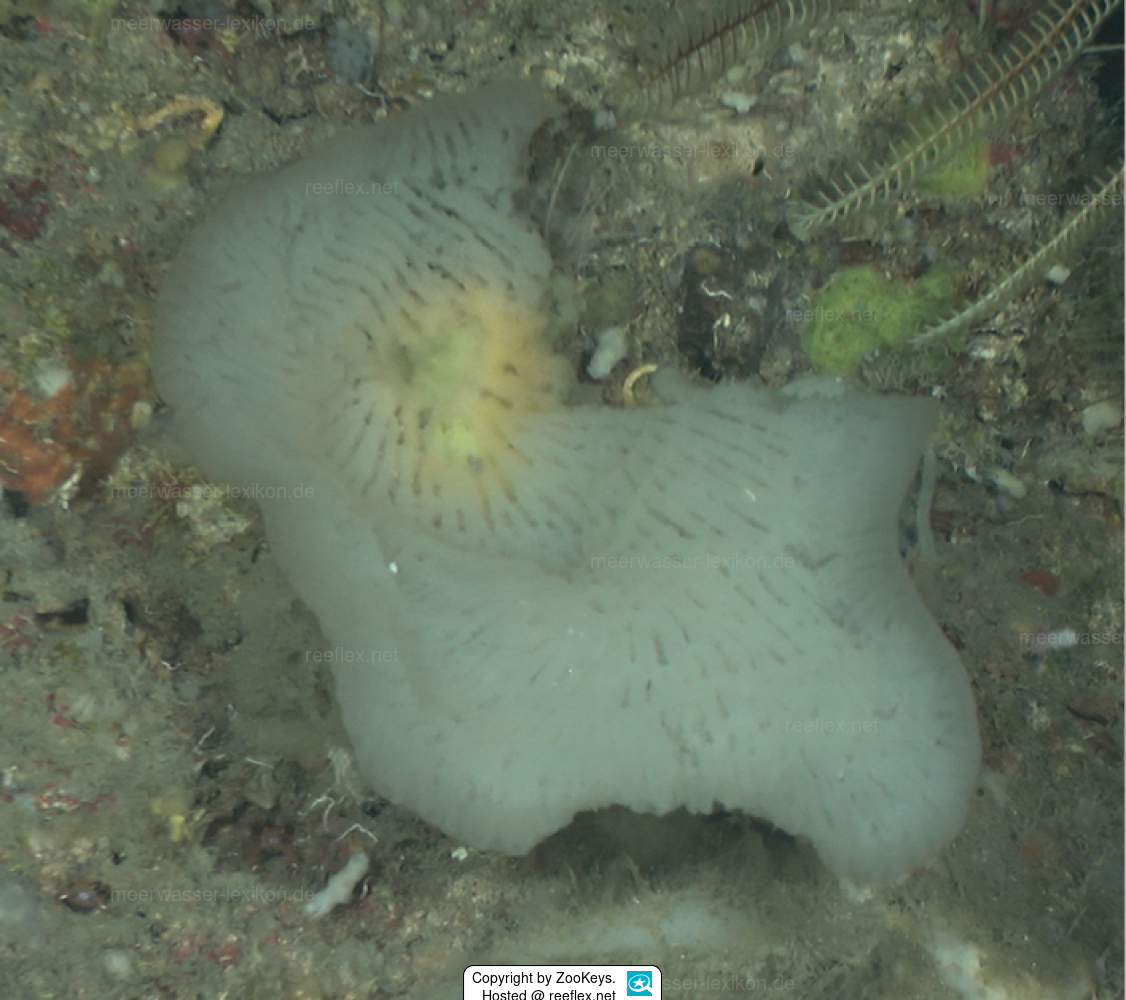
The inner surface of the cup has elongated pits or grooves, several cm long, and more than 1 cm wide.
It grows cup-shaped, with a fringed edge and fenestrated sides, diameter 8 - 15 cm, height up to 14 cm.
Although sponges produce more body cells than they need for themselves and release these into the tank as food for inhabitants, we do not recommend keeping them in the aquarium, as Dactylocalyx pumiceus is a cold-water animal.
Synonyms:
Dactylocalyx ingalli (Bowerbank, 1869)
Dactylocalyx patella Schulze, 1886
Dactylocalyx potatorum Schmidt, 1880
Dactylocalyx pumiceus var. stutchburyi Sollas, 1879
Diplacodium mixtum Schmidt, 1880
Iphiteon ingalli Bowerbank, 1869
The inner surface of the cup has elongated pits or grooves, several cm long, and more than 1 cm wide.
It grows cup-shaped, with a fringed edge and fenestrated sides, diameter 8 - 15 cm, height up to 14 cm.
Although sponges produce more body cells than they need for themselves and release these into the tank as food for inhabitants, we do not recommend keeping them in the aquarium, as Dactylocalyx pumiceus is a cold-water animal.
Synonyms:
Dactylocalyx ingalli (Bowerbank, 1869)
Dactylocalyx patella Schulze, 1886
Dactylocalyx potatorum Schmidt, 1880
Dactylocalyx pumiceus var. stutchburyi Sollas, 1879
Diplacodium mixtum Schmidt, 1880
Iphiteon ingalli Bowerbank, 1869

