





 Benoît Segerer


Info
Runcina coronata (Quatrefages, 1844)
Runcina coronata is a headshield slug from the superfamily Runcinoidea. This family has no subfamilies according to the taxonomy of Gastropoda by Bouchet & Rocroi, 2005.
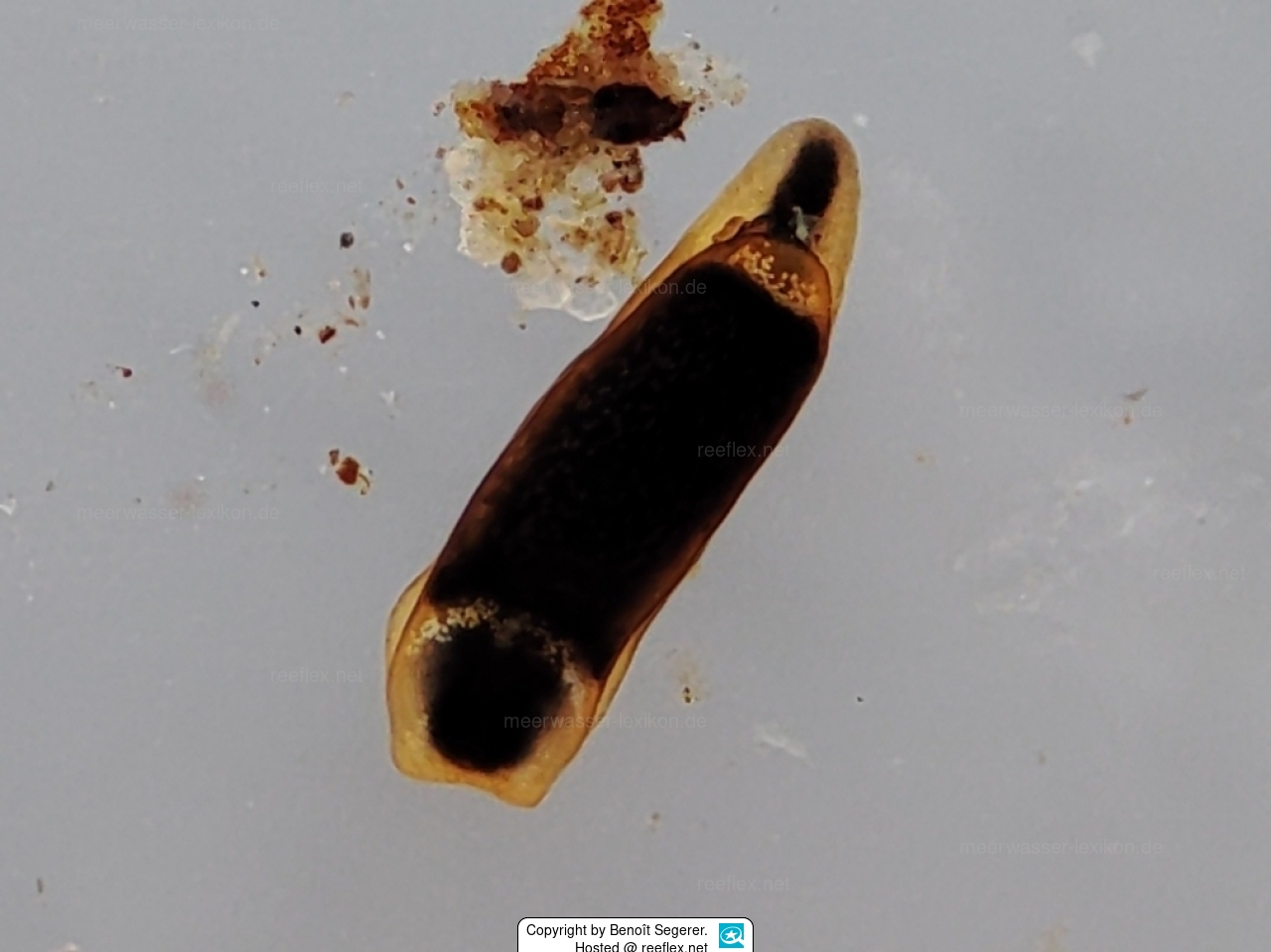
Runcina Coronata is a shellless species. It grows to a maximum size of 6mm. The head is blunt at the front and has no tentacles. The body is dark brown or olive green with lighter areas on the head. Three small posterior gills protrude from the right end of the mantle, distinguishing the genus from similar sea snails, e.g. Limapontia senetra.
It occurs intertidal in clear coral rock pools. However, due to their small size and the crypsis on the algae on which they live, the species in this genus are rarely studied, so they probably have a wider distribution.
etymology
The genus name "Runcina" comes from the Latin "runcina", which means carpenter's plane.
The species name "coronata" is Latin and means "crown".
Synonymised names
Pelta coronata Quatrefages, 1844 · unaccepted
Runcina hancocki Forbes [in Forbes & Hanley], 1851 · unaccepted
Runcina coronata is a headshield slug from the superfamily Runcinoidea. This family has no subfamilies according to the taxonomy of Gastropoda by Bouchet & Rocroi, 2005.
Runcina Coronata is a shellless species. It grows to a maximum size of 6mm. The head is blunt at the front and has no tentacles. The body is dark brown or olive green with lighter areas on the head. Three small posterior gills protrude from the right end of the mantle, distinguishing the genus from similar sea snails, e.g. Limapontia senetra.
It occurs intertidal in clear coral rock pools. However, due to their small size and the crypsis on the algae on which they live, the species in this genus are rarely studied, so they probably have a wider distribution.
etymology
The genus name "Runcina" comes from the Latin "runcina", which means carpenter's plane.
The species name "coronata" is Latin and means "crown".
Synonymised names
Pelta coronata Quatrefages, 1844 · unaccepted
Runcina hancocki Forbes [in Forbes & Hanley], 1851 · unaccepted


