

 Paul Norwood, USA


Info
Cucumaria pallida is known from the border between Alaska and British Columbia to the Channel Islands in California and from the intertidal zone to a depth of 91 meters.
The sea cucumber usually lives buried in the crevices between subtidal boulders.
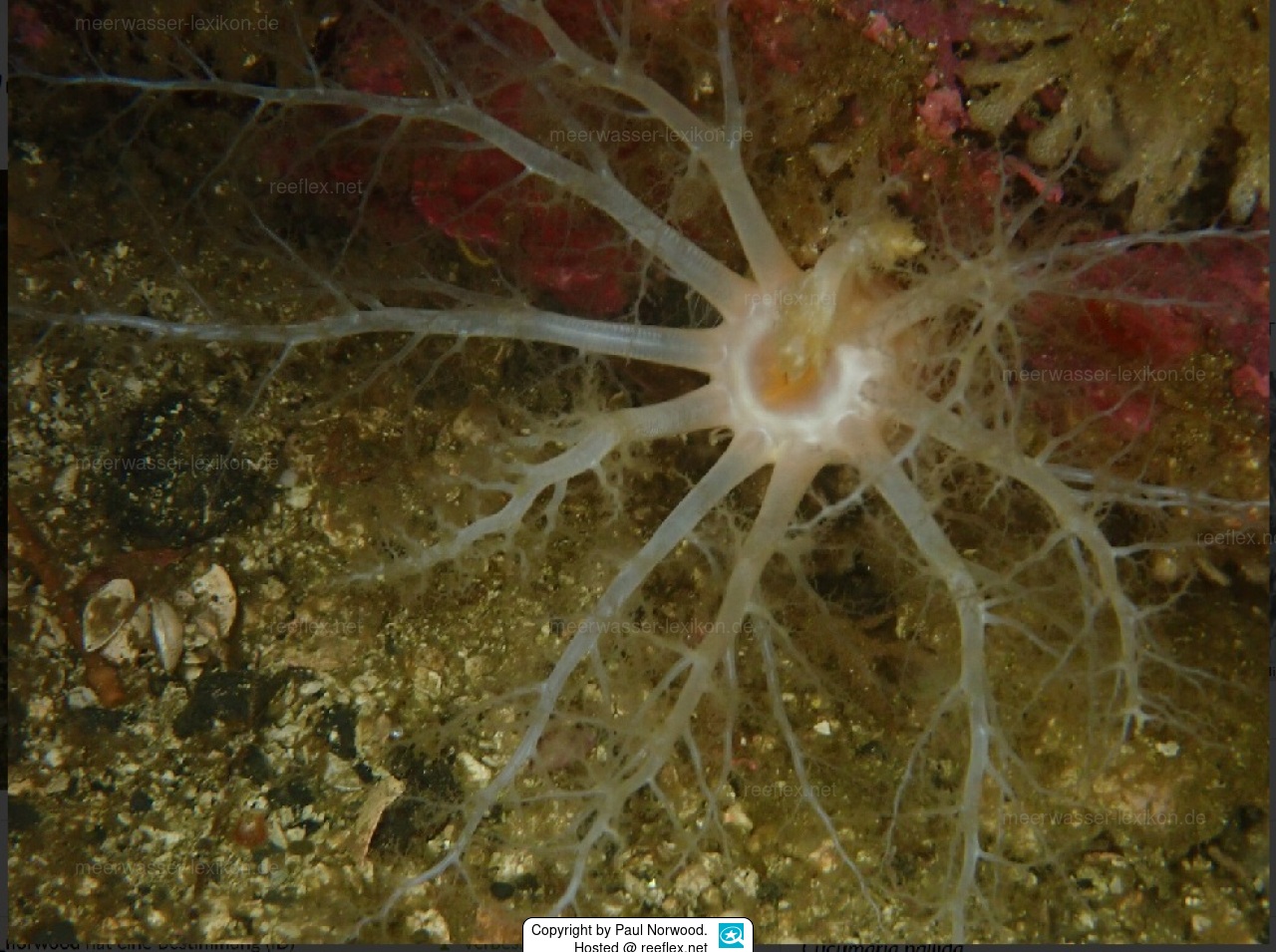
This sea cucumber has 10 delicate, pale, bushy, and equal-length buccal tentacles and 5 rows of tube feet, with the ventral rows being more developed.
The body of the sea cucumber can be light brown, yellowish, or creamy white, but has no dark spots.
The sea cucumber feeds by extending its buccal tentacles into the water column and capturing passing plankton.
In the past, Cucumaria pallida was considered a pale form of Cucumaria miniata, but the shape and size of the ossicles, body color, and reproductive characteristics distinguish Cucumaria pallida from other species of the genus Cucumaria.
The spawning season is from mid-March to early May, with females releasing egg strings that later dissolve.
The sea cucumber usually lives buried in the crevices between subtidal boulders.
This sea cucumber has 10 delicate, pale, bushy, and equal-length buccal tentacles and 5 rows of tube feet, with the ventral rows being more developed.
The body of the sea cucumber can be light brown, yellowish, or creamy white, but has no dark spots.
The sea cucumber feeds by extending its buccal tentacles into the water column and capturing passing plankton.
In the past, Cucumaria pallida was considered a pale form of Cucumaria miniata, but the shape and size of the ossicles, body color, and reproductive characteristics distinguish Cucumaria pallida from other species of the genus Cucumaria.
The spawning season is from mid-March to early May, with females releasing egg strings that later dissolve.


