





 ResearchGate


Info
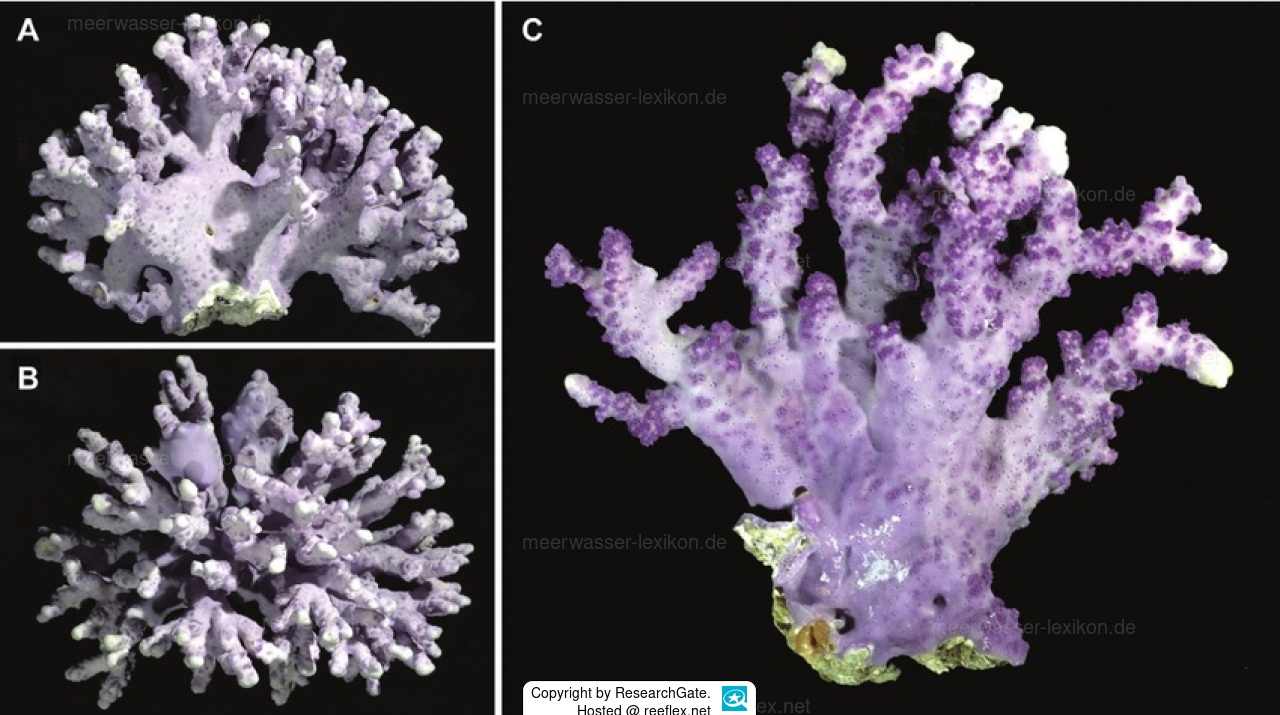
Distichopora robusta, a filigree coral, but actually a hydrozoan, was first discovered in shallow waters in the Gulf of Chiriquí, Panama, East Pacific, and later found around Malpelo, an uninhabited volcanic rock island in the eastern Pacific belonging to Colombia.
Distichopora robusta does not form a free medusa stage, but only the sessile stage.
The characteristics of the aforementioned genera include the following properties:
The animals are colonial, ahermatypical, and usually form a tree-like shape.
They often display very bright and attractive shades of red and violet.
Since these animals do not perform photosynthesis, they depend on the uptake of organic suspended matter, which they absorb from the water column with small tubular, hair-like tentacles called gastrozooids.
The skeletons of these animals are quite hard, and unlike calcium skeleton corals, the color of the corals is consistent throughout to the core.
Etymology
The specific name robusta refers to the thick, robust branches of this species.
Distichopora robusta does not form a free medusa stage, but only the sessile stage.
The characteristics of the aforementioned genera include the following properties:
The animals are colonial, ahermatypical, and usually form a tree-like shape.
They often display very bright and attractive shades of red and violet.
Since these animals do not perform photosynthesis, they depend on the uptake of organic suspended matter, which they absorb from the water column with small tubular, hair-like tentacles called gastrozooids.
The skeletons of these animals are quite hard, and unlike calcium skeleton corals, the color of the corals is consistent throughout to the core.
Etymology
The specific name robusta refers to the thick, robust branches of this species.

